Skip to Content

PBX Phone Systems

PBX (Private Branch Exchange) phone systems are business telecommunication solutions that allow organizations to manage internal and external calls through a centralized network. They provide advanced features like call routing, voicemail, conferencing, and integration with VoIP for cost-effective and scalable communication.

Learn more

What is PBX?


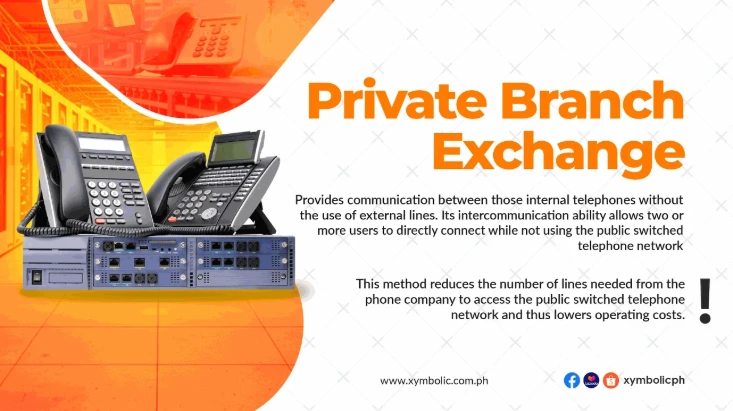
PBX (Private Branch Exchange) is a private telephone network used within an organization to manage internal and external calls. It allows employees to communicate internally and externally using shared phone lines, offering features like call routing, voicemail, conferencing, and extensions—all without requiring a separate phone line for each user.

Traditional Analog PBX


Traditional analog PBX is a legacy phone system that uses analog telephone lines and physical switching hardware to route calls within an organization. It provides basic features like call transfer and extensions but lacks advanced functionalities such as VoIP integration, remote access, and scalability, making it less suitable for modern business needs compared to digital or cloud-based PBX systems.

Digital PBX


Digital PBX is a phone system that uses digital signals instead of analog to manage internal and external calls within an organization. It offers enhanced features such as voicemail, call forwarding, conferencing, and better call quality compared to traditional analog PBX, while still relying on on-premise hardware for operation.

IP/VoIP PBX


IP/VoIP PBX (Internet Protocol / Voice over IP Private Branch Exchange) is a modern phone system that uses internet protocol to transmit voice calls instead of traditional phone lines. It allows businesses to make and receive calls over the internet, offering advanced features like video conferencing, call forwarding, voicemail-to-email, and integration with CRM systems—all while reducing costs and improving scalability compared to traditional PBX systems.

Hosted/Cloud PBX


Hosted/Cloud PBX is a phone system where all PBX functionalities are delivered over the internet and hosted by a service provider, eliminating the need for on-site hardware. It offers businesses flexibility, scalability, and cost savings, allowing users to access advanced features like call routing, voicemail, conferencing, and remote connectivity from anywhere using IP phones or softphones.
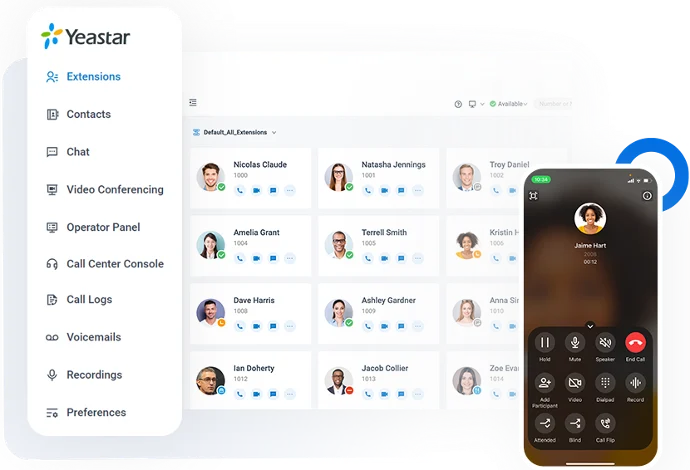
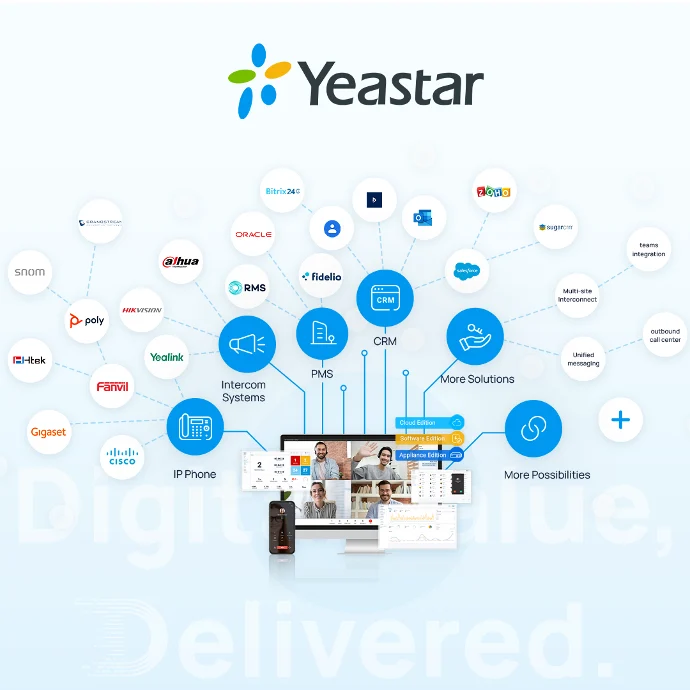
Beyond Limitations: Yeastar PBX—The Easy-First Unified Communications Solution with More Built-In for Business Efficiency

For 15 years, the Yeastar IP PBX System has served more than 200,000 customers in over 100 countries with flexible, reliable, and powerful business VoIP & unified communications solutions. The Yeastar IP PBX phone system is designed to meet various communications requirements from different verticals, whether entry-level or more sophisticated ones. 

Go beyond a traditional PBX with fully integrated communications in one platform. Yeastar’s business phone system is available as a cloud, hardware, or software solution—tailored to your preference.

Frequently asked questions

Here are some common questions about our PBX systems solutions and services.

A Private Branch Exchange (PBX) is a phone system that routes calls within your organization and to/from the public telephone network. It provides extensions, call routing, voicemail, IVR menus, and features like call transfer, hold, and conferencing.

  • Traditional/Analog PBX – hardware-based, uses analog lines.
  • Digital PBX – uses digital signaling (e.g., ISDN) and on-prem hardware.
  • IP/VoIP PBX—routes calls over your data network/Internet.
  • Hosted/Cloud PBX – provider-hosted; no major on-site hardware.

Not necessarily. Modern PBX solutions (especially cloud PBX) include remote management, monitoring, and support. On-prem PBX may need occasional on-site assistance, but admin portals make routine tasks (add users, change extensions, set call flows) simple.

IP/VoIP and cloud PBX systems typically offer APIs, webhooks, and native connectors to CRMs (e.g., screen pop for inbound calls), ticketing systems, and productivity suites (calendar presence, click-to-call, softphone apps). Ask for your vendor’s integration catalog and API documentation.

You’ll need reliable bandwidth, low latency/jitter, and QoS enabled on your routers/switches to prioritize voice traffic. For remote users, a stable broadband link or SD‑WAN helps. Many setups use SIP trunks for external calling.

Yes—when configured properly. Key controls include SIP authentication, strong passwords, role-based access, TLS/SRTP for signaling/media encryption, firewall rules, IP allowlists, and fraud detection (e.g., international call limits). Cloud PBX providers should offer hardened infrastructure and regular security updates.

Typical features include auto-attendant/IVR, voicemail-to-email, call queues, hunt groups, call recording, music on hold, conference bridges, mobile/softphone apps, presence, and analytics/reporting.

Typical features include auto-attendant/IVR, voicemail-to-email, call queues, hunt groups, call recording, music on hold, conference bridges, mobile/softphone apps, presence, and analytics/reporting.

On-prem PBX: hardware, licenses, installation, SIP/line costs, maintenance.

Cloud PBX: monthly per‑user fees, optional add‑ons (recording, analytics), phones/headsets.
Factor in support SLAs, number porting, training, and network readiness (QoS hardware if needed).

Look for uptime SLAs, geo‑redundant data centers (for cloud), and backup power/links (for on‑prem). Ensure local emergency services routing is correctly configured (with accurate location details). Have a failover plan (e.g., auto‑forward to mobiles during outages) and routine disaster recovery testing.

It's time to move forward.

Compared to NEC’s on-premise PBX for SMBs, Yeastar’s on-premise PBX goes beyond meeting everyday business needs—it proactively drives efficiency with a full suite of modern features designed to optimize operations and enhance productivity.

Discover more

A side-by-side feature comparison.

Yeastar and 3CX go head-to-head as two powerful, feature-rich, and scalable PBX and unified communications solutions designed to meet the diverse needs of modern businesses with ease and flexibility.

Comparison in the realm of unified communications.

This document provides a comprehensive comparison between Yeastar and Grandstream in the field of Unified Communications (UC). Before diving into the details, we’ll start with a brief introduction to both brands and their product portfolios.

Continue reading

The lessons and the alternative.

In late 2020, Panasonic announced its plan to exit the business communications market—including PBX, SIP, and scanner product lines—within a two-year timeframe, completing the transition by early 2023.

Continue reading