Objectives
Establish awareness among all employees of the standard of conduct expected of them in the discharge of their duties and responsibilities and their relationship with the company, their colleagues, customers, vendors, and the public in general.
Enhance order, discipline, and correct specific behaviors to have harmonious employer-employee relations at Xymbolic.
Provide the management with sufficient guidelines in the administration of disciplinary cases and inform all employees of existing rules and regulations on behavior for their guidance.
Standardize policies and procedures with respect to the reporting of violations of the company’s rules and regulations.
Policies
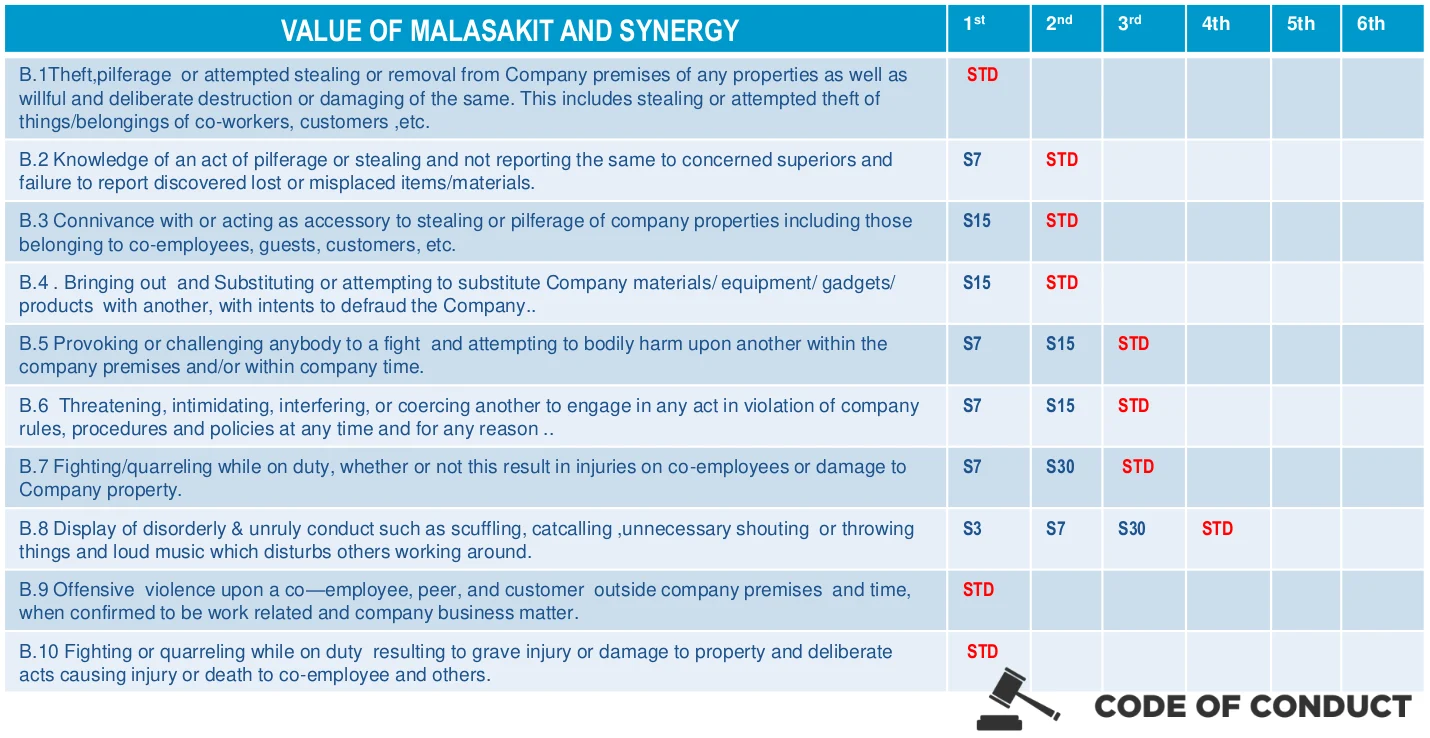
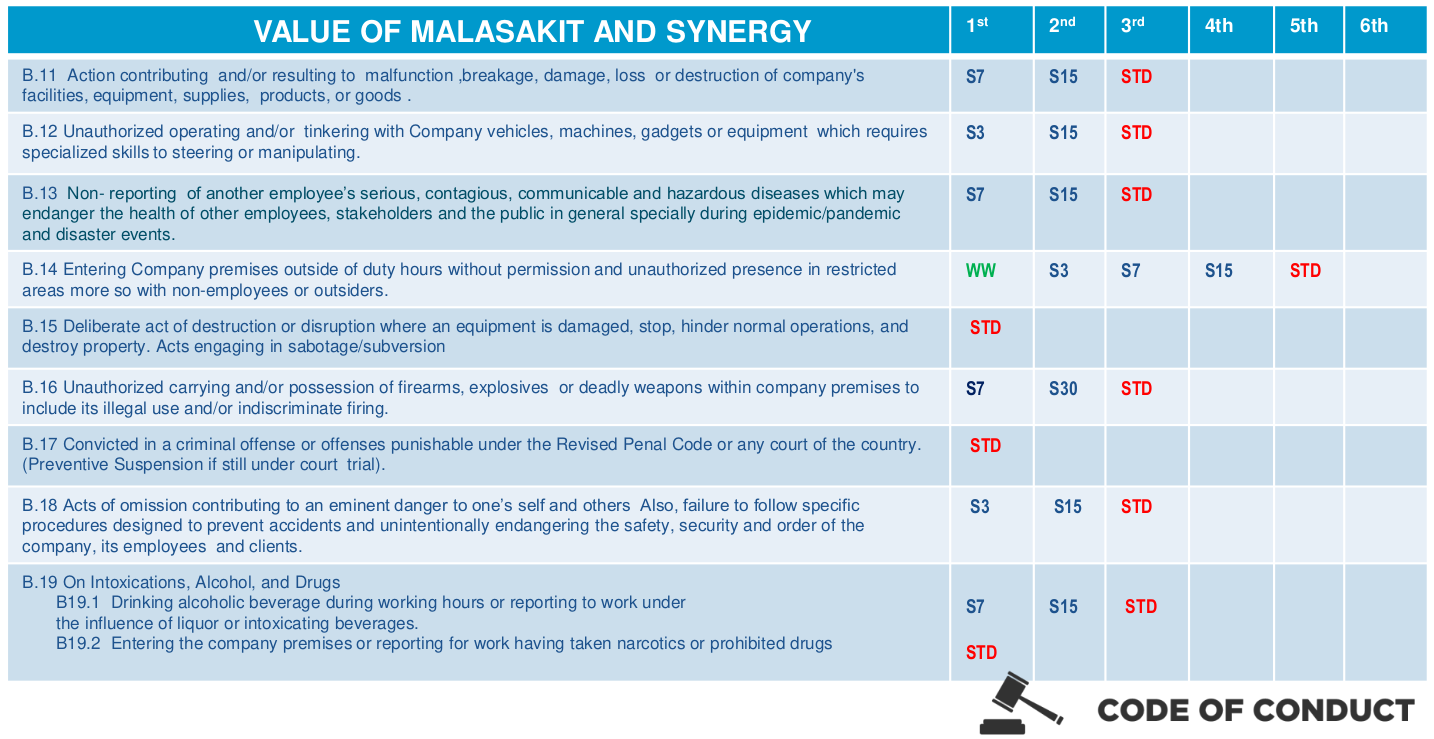
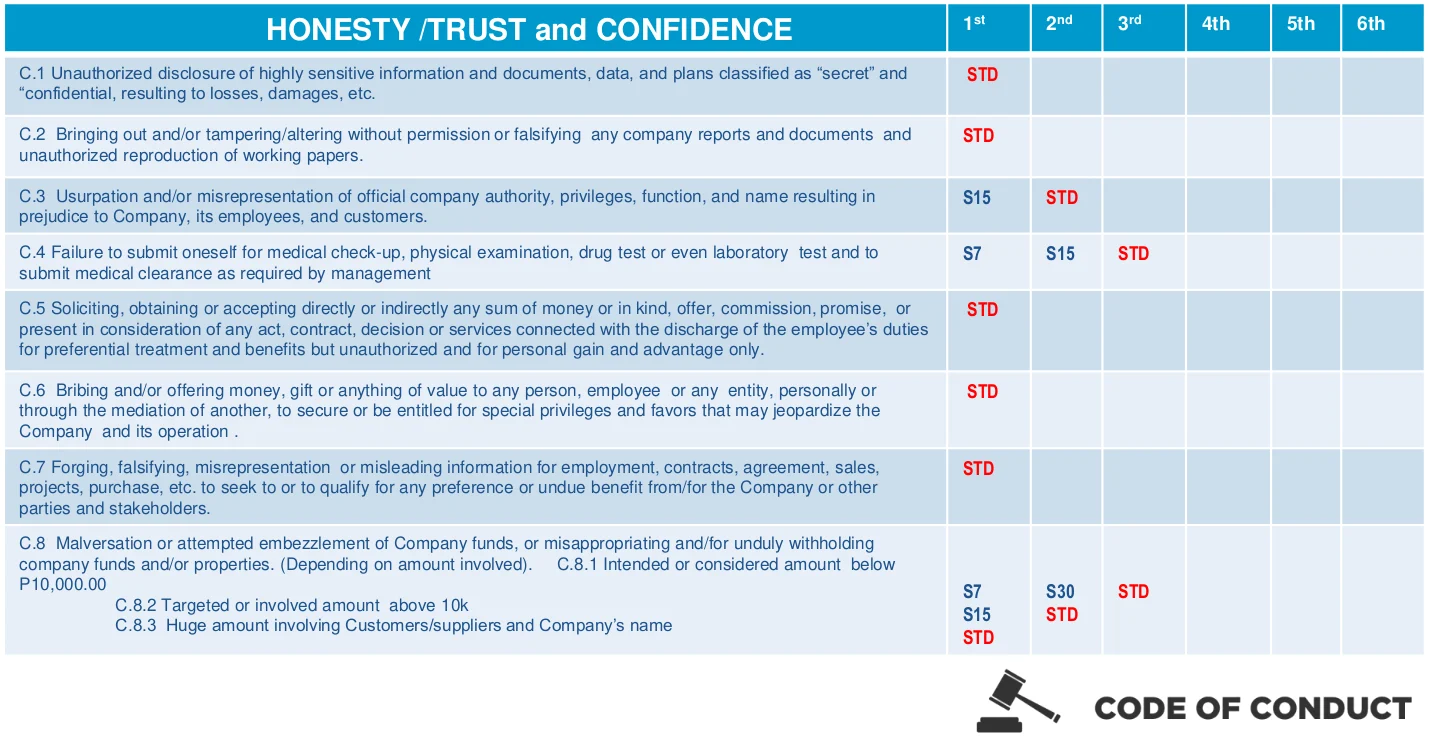
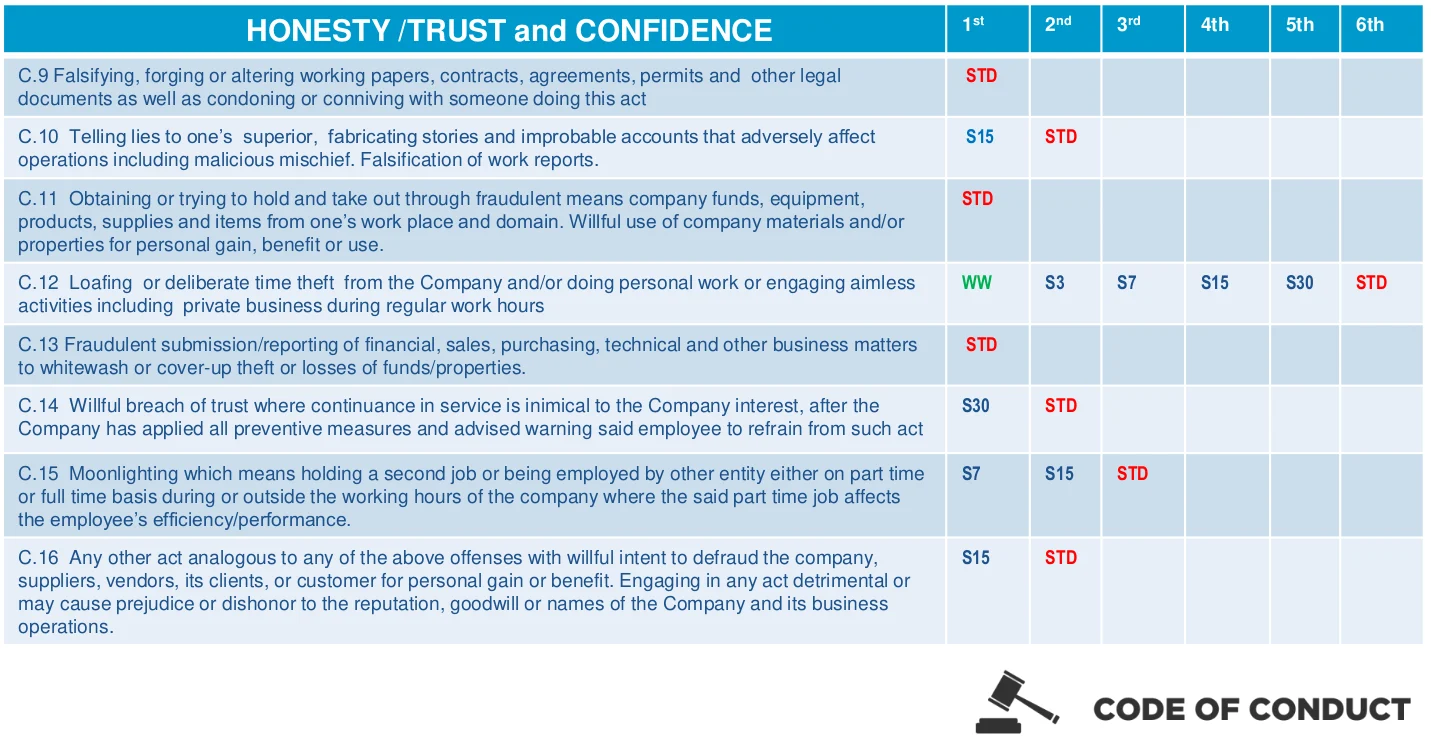
It is the policy of the company to maintain and preserve order, harmony, and discipline in its organization and among its employees through the enforcement of reasonable rules and regulations. While disciplinary actions may be imposed for violations of these rules, the overall intent is more to prevent the infraction than the administration of the penalty. Thus, the basic thrust of this policy is preventive rather than punitive, where education and correction should be the focus of discipline rather than mere punishment.
Should disciplinary action be warranted by the situation, it is the company’s belief that, in order to be effective, the corresponding sanction shall be meted out immediately after a violation has been committed, preferably no later than 48 hours after the commission of the offense. It is stipulated that behavioral problems be resolved at the lowest level and at the earliest possible time.
The responsibility of administering disciplinary action is initially placed on the immediate superior. However, in performing this function, he or she should work closely or coordinate with the department head concerned and the Human Resource Department.
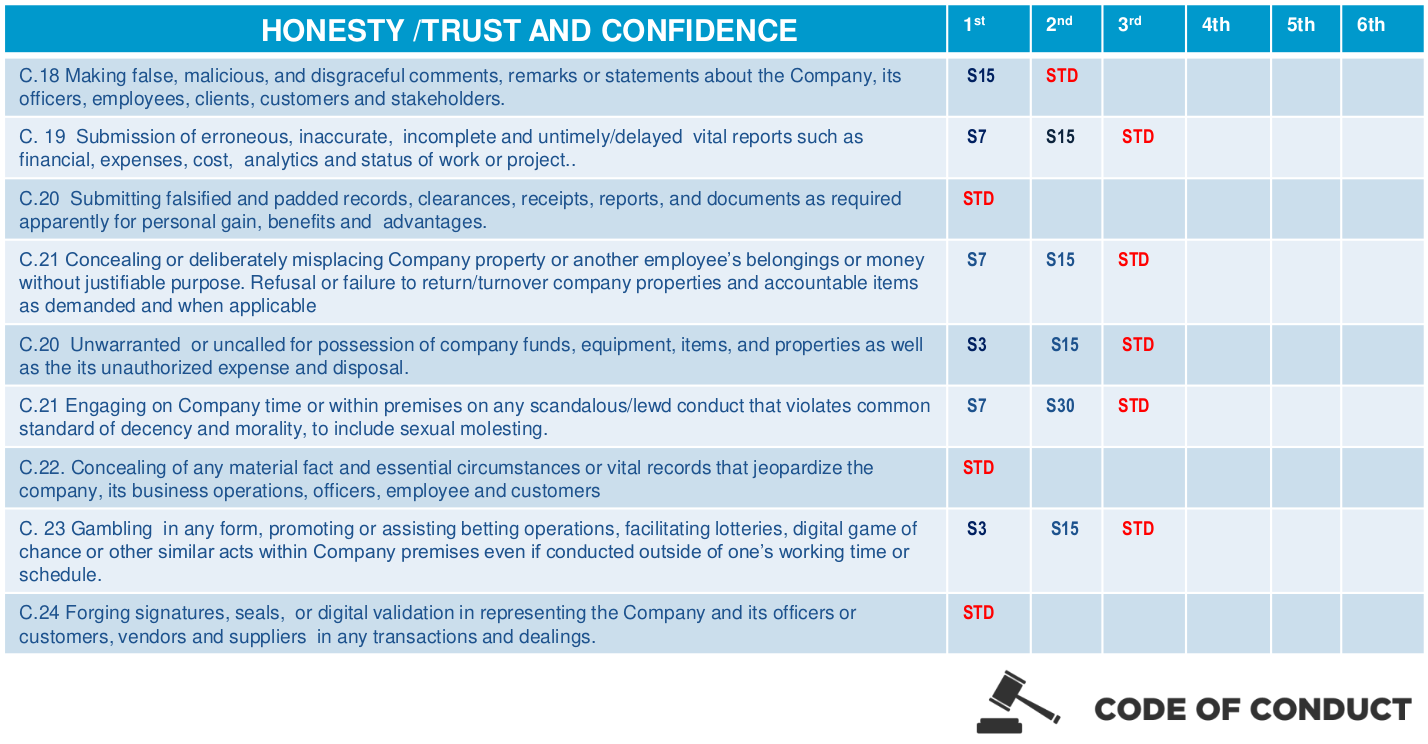
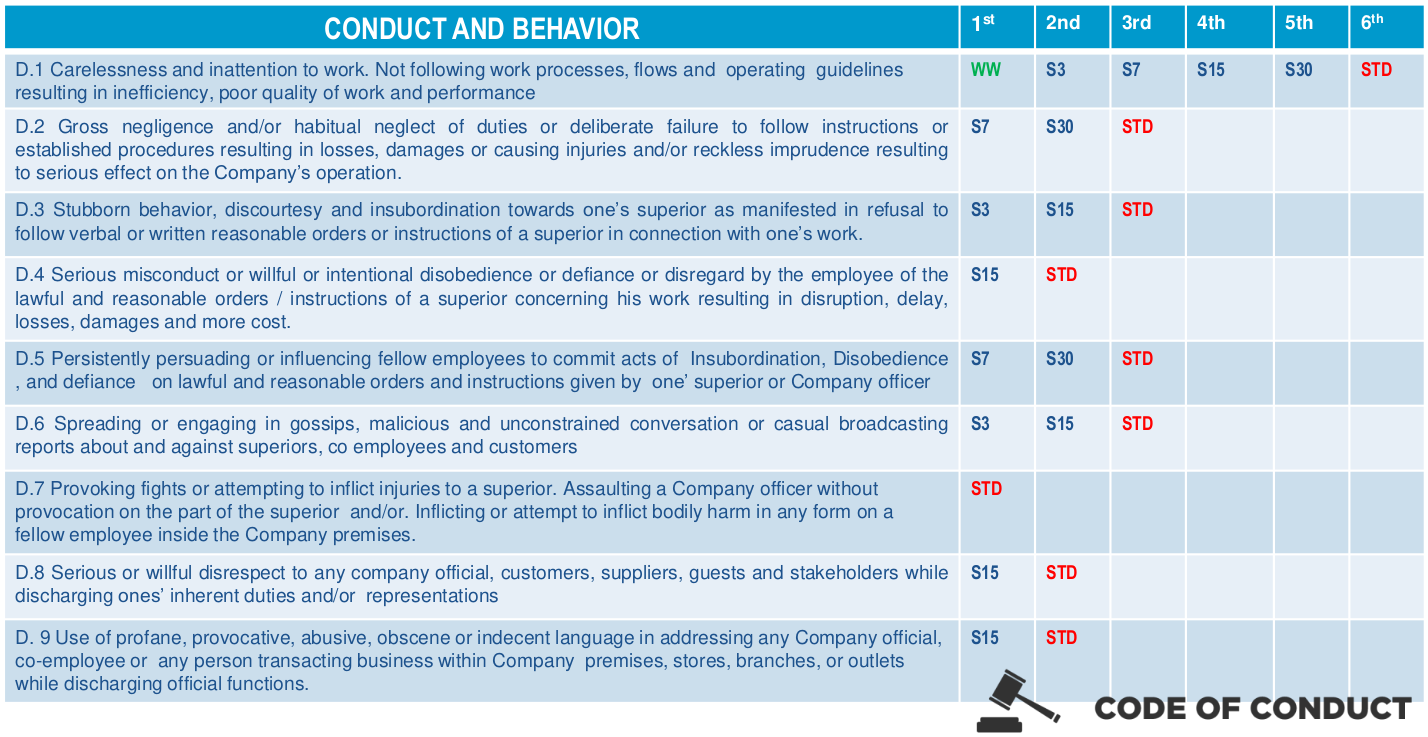
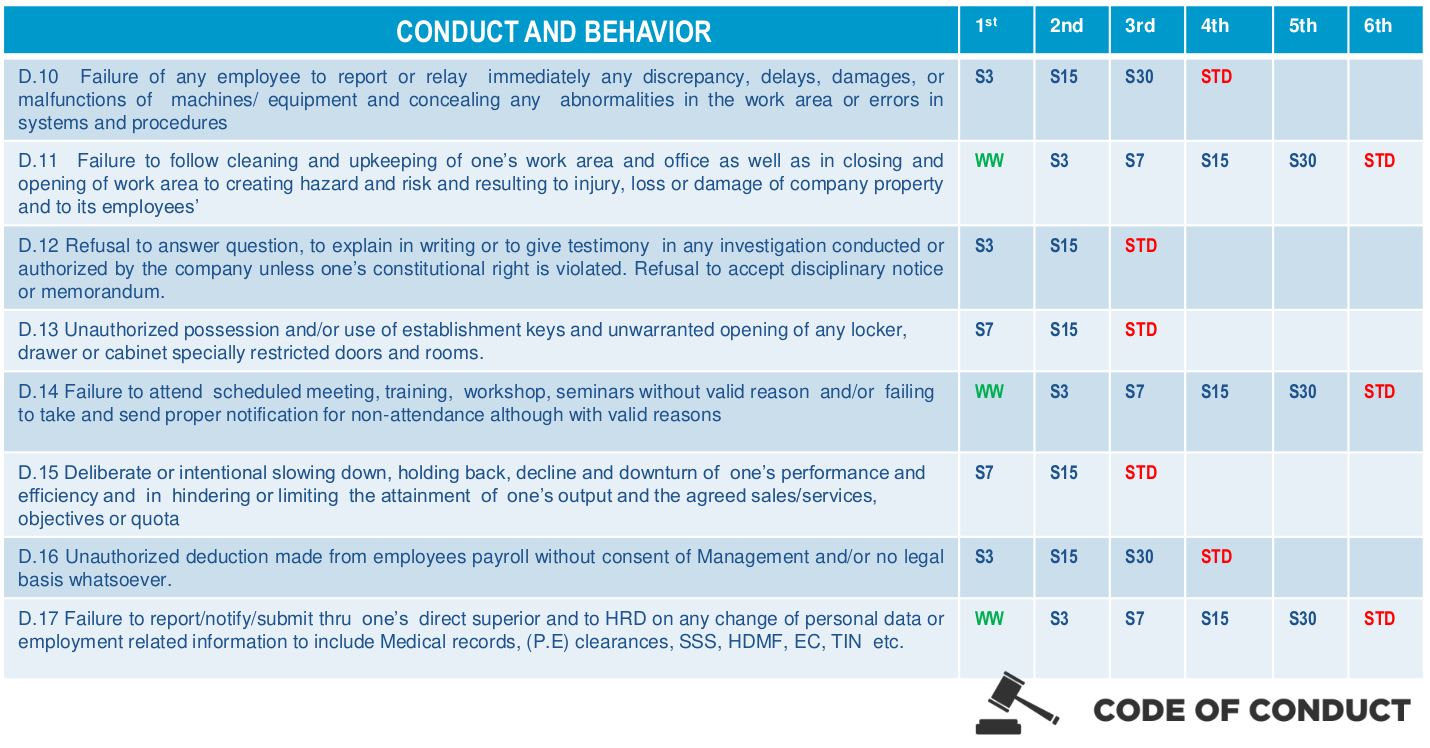
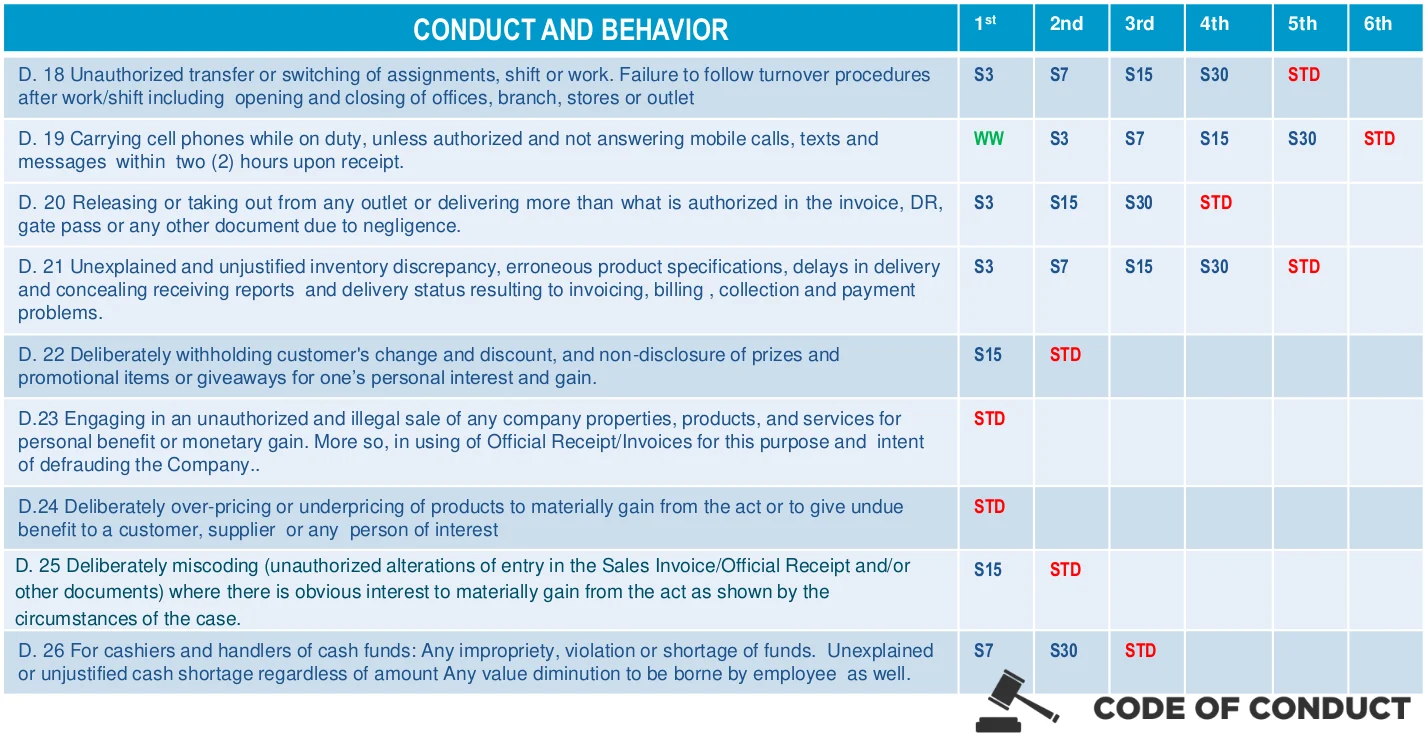
Although sanctions are provided for each offense and the frequency with which they are repeated, it is still the department head’s wise and prudent use of his discretion and judgment that shall be the overriding consideration in deciding whether to impose a disciplinary action or not. While cases may seem to be identical in nature, their handling is almost always different. As such, it is in the interest of equity as well as flexibility for sanctions in the Code to be used merely as a framework of reference and not as an absolute requirement to be applied blindly.
Although specific penalties are provided for each offense, management reserves the right to impose a lower penalty when, in its sole discretion, the circumstances surrounding the commission of the punishable offense so warrant. Also, situational pressure and an individual’s circumstances should be considered when appropriate disciplinary action is being determined.
This guideline fosters sound employee-supervisor/manager relations through effective policies and procedures, channels of communication, and ultimately reconciliation and settlement of work-related problems. It also provides sufficient guidelines for administering disciplinary cases.
An employee who committed a number of violations at the same time or a series of offenses at a given time shall be subjected to the corresponding prescribed penalties.
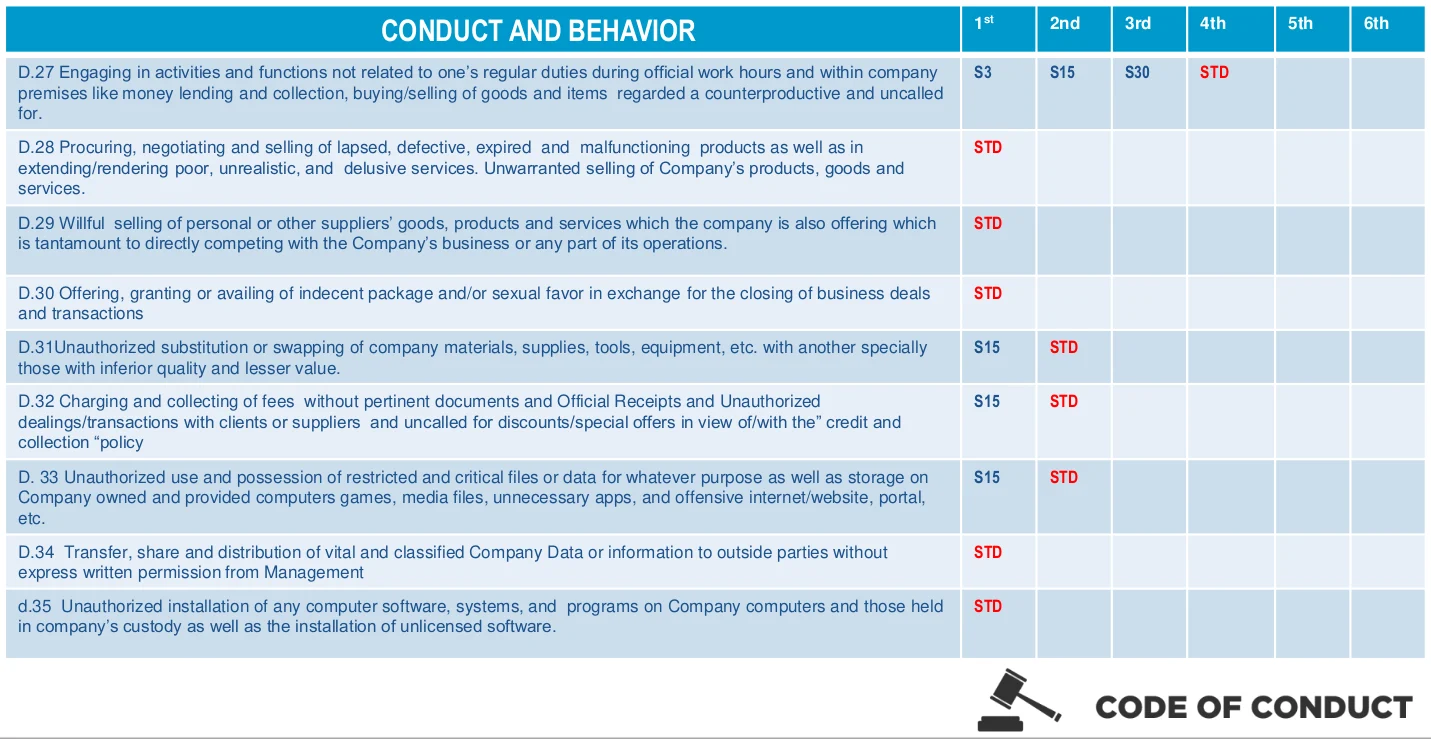
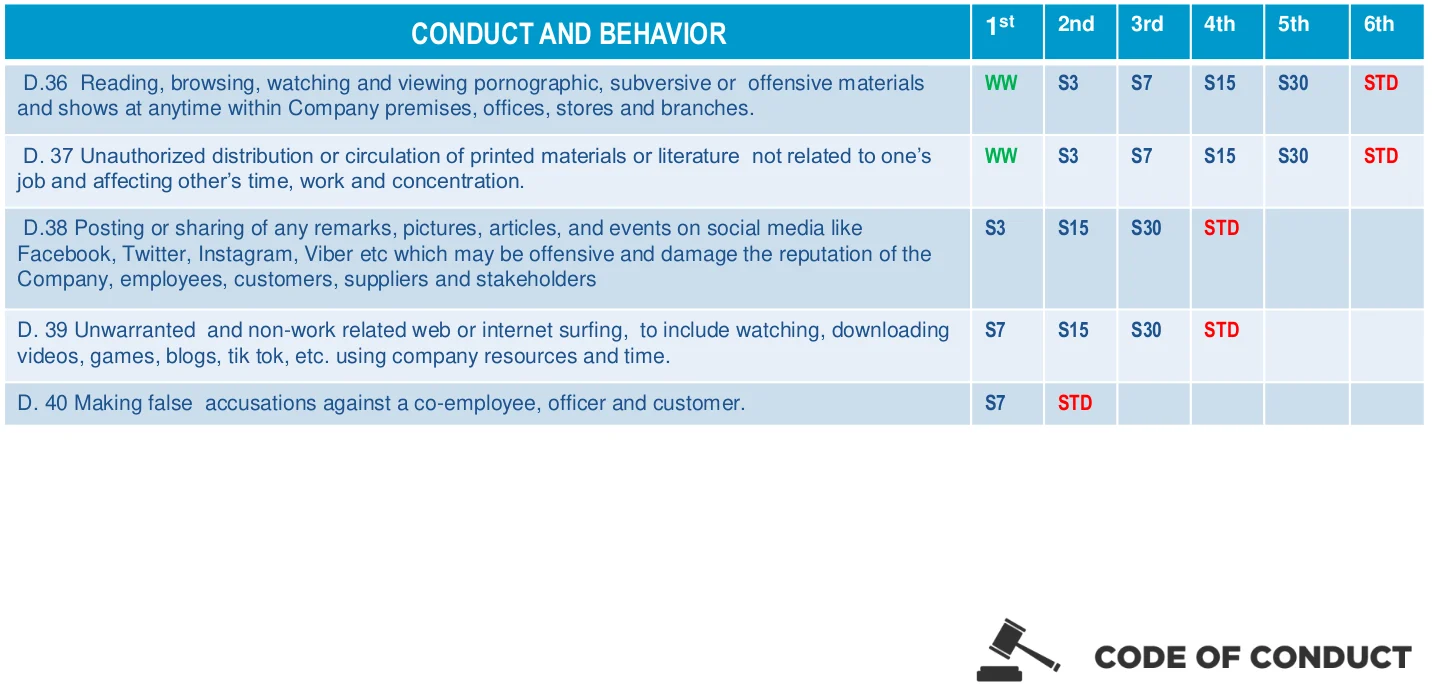
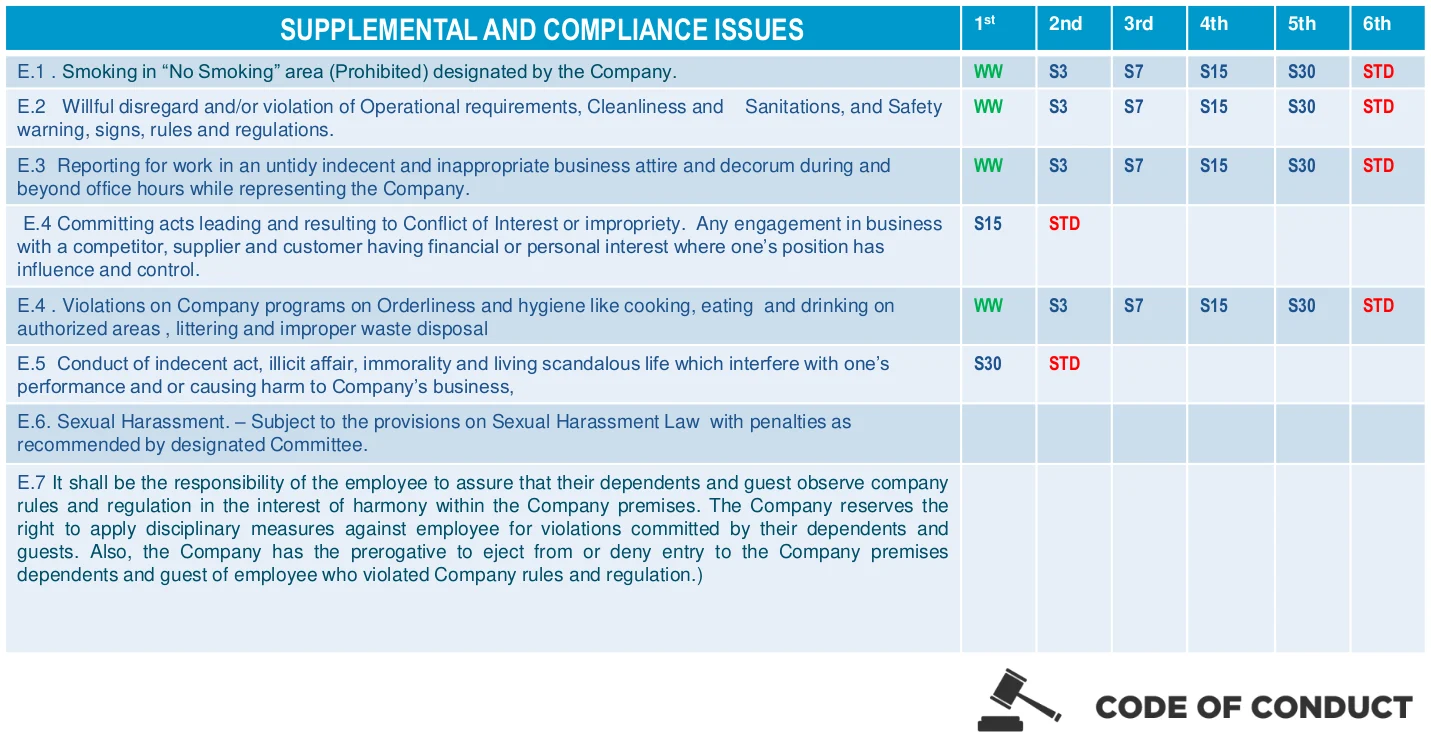
All records pertaining to offenses and sanctions shall be carried in the employee’s 201 file. For the purpose of determining the frequency and penalty applicable, the offense and sanction meted out from the implementation of these rules and regulations shall not carry a prescriptive period, except for the sanctions regarding tardiness and absenteeism and those subjected to written warning only, which will be prescribed after (1) one calendar year.
Procedures
Step 1
If an employee has allegedly committed any violations or infractions, the immediate superior shall interview or call the attention of the offender in private to explain why he or she committed the violations or deny having committed the same. He or she shall afford that if the employee occurs within the work area or jurisdiction of another department, the supervisor or department head in whose area of responsibility the offense was committed shall prepare the violation report.
Step 2
A violation report shall be prepared by the supervisor within 24 hours of the discovery of the violations, furnishing a copy to both HRD and the department head. If possible, a record of what transpired during the meeting shall be produced and must be signed by the employee, too. Similarly, written statements from the offender, witness, and other documentary or physical evidence shall be attached to or accompany the report.
Step 3
A notice to explain (NTE) form shall be immediately issued to the erring employee in order to be heard, explain his or her side of the alleged violation as a matter of due process, and submit a written explanation within 48 hours upon receipt. Failure on the part of the violator to comply with this requirement means the right to defend or due process is waived, and the corresponding corrective action shall be issued at once. The one who initiates the report and assesses the NTE and written explanation imposes the appropriate penalty and/or recommends the corresponding sanctions based on the Code of Conduct and signs a duly processed document for transmittal to the department head and HRD.
Step 4
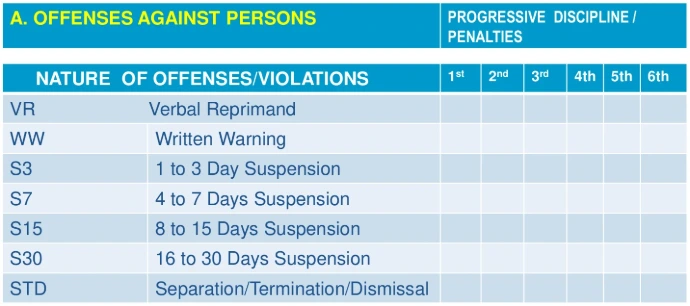
Verbal reprimands and written warnings may be immediately acted upon by the supervisors. In cases where notice of decision requires suspension of not more than one (1) week, the department head concerned may render the decision of the case and serve the corrective action with a copy forwarded to the HRD for recording and reference.
Step 5
All cases involving more than one (1) week of suspension, preventive suspension, and termination, without exception, shall be administered and closely coordinated with HRD specifically for investigation, administrative hearings, and progressive penalties. In cases of grave misconduct, gross violations, and dismissal for just cause, the HR office may review all reports and documentation up to the notice of decision and recommend whether the corresponding sanction shall be upheld or alternative action be conducted. In a situation where the identity of the employee is already established beyond reasonable doubt, either by admission or strong corroborative evidence from a witness, further investigation may be waived, and HRD or the department head concerned may immediately issue a notice of decision.
Where the employee has committed a serious offense and his service or presence poses a serious and imminent threat to the life or property of the employer and co-workers, the employee may be placed under preventive suspension of not more than thirty (30) days by his or her department head or HRD pending the result of the investigations. The equivalent compensation shall be given. If penalized for suspension, the number of days served shall be credited as a penalty.
Step 6
In cases of grave offenses, which normally call for dismissal or termination of employment, a discharge procedure should be followed.
Upon commission of an offense, the supervisor should submit a compulsive violation report to his department head within 48 hours.
The department head issues an NTE to the erring employee of the charge against him to submit within 48 hours a written explanation why a drastic disciplinary action should not be imposed upon him. Failure to submit a written explanation means that he or she waives his right to due process and imposes the appropriate penalty through the notice of decision. If deemed necessary, he or she will be placed under preventive suspension and advised on the pending investigation and administrative hearing required.
A formal investigation of grave offenses shall be conducted by both the HR Head and the Department Head. The offender shall be given full opportunity to present his side and present witnesses and support documents on his behalf.
after a thorough investigation and evaluation of the case. If the employee is found guilty, a memorandum or notice of termination shall be served by his department head, duly noted by the HRD Head, and a copy shall be furnished to DOLE.
Step 7
If the penalized employee is not satisfied with the decision, an appeal to the grievance committee is possible, and the cases shall be settled through grievance machinery as provided for. In instances where the functional head and HRD have a disagreement, all papers (Violation Report, NTE/WE/investigation results, and records of the case) are sent to the President or General Manager for review and final decision.
Responsibility to Know
All rules and regulations shall be announced to all, and no regulation is considered effective unless properly communicated to all employees. Everyone is expected to study, understand, and comply with these rules and regulations.
No one can plead ignorance of the same. Likewise, everyone is required to read all notices posted on the bulletin boards and is responsible with respect to any matter appearing in such notices that may concern or affect them.